 ASSEMBLIES OF GOD
Appealing to a Changing Culture
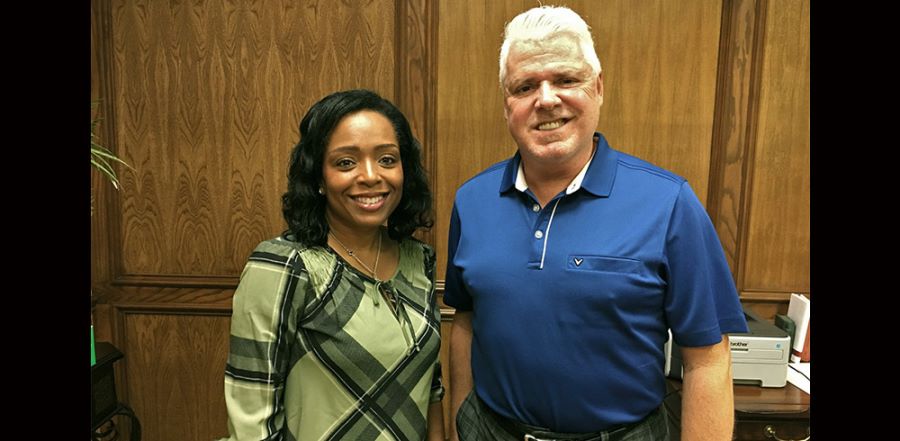
When Vanessa Hall became Women’s Ministries director for the Assemblies of God South Texas District in 2014, she felt as though she had walked into a different subculture.
Hall found herself immersed in a largely homogenous culture, where many people had an extensive AG heritage dating back several generations. As the first African-American in the position, she didn’t believe her race to be a barrier; however, her short time in the Fellowship presented some challenges. In addition, the fact that her husband, Kenneth, worked as a sales and marketing executive for an engineering firm rather than a pastor, also set her apart from many WM leaders in the district.
In an effort to forge relationships regardless of cultural or generational background, Hall rolled out an initiative called “Taking Care of the Sisterhood.” In district WM conferences, Hall has emphasized the need for multiethnic and multigenerational participation in an unprecedented way.
“It’s good to have a rich culture that provides a feeling of belonging and protection and family,” says Hall, who has a background as founder of Grace Matters Ministries through which she taught a radio Bible study broadcast in seven states. “But when other people want to join, there needs to be an acclimation process so people don’t feel like outsiders who can’t measure up to the rich heritage. We need to try to be equitable.”
Accepting newcomers is especially important in an era when many Generation Xers and millennials have forsaken the religious roots of their parents. Younger churchgoers don’t necessarily relate to the days of reserved seating in church pews, leaders sitting on the front row, and pastoral staff on the platform.
Although the district includes Houston and San Antonio — the nation’s fourth and seventh largest cities respectively — many of the AG’s 300 churches in South Texas are located in rural, largely white, areas. The AG has 13 separate Hispanic language districts, and four of them are located in parts of Texas.
Hall says she has aligned herself with the vision of South Texas District Superintendent Tim R. Barker.
“He doesn’t have preferences for a certain group of people,” Hall says.
Barker says the district has made an intentional effort in the past decade to facilitate the blending of different ethnicities. He notes that predominantly Indian, Nigerian, and Ghanaian congregations are now part of the Houston-based AG South Texas District.
“Churches are becoming more representative of the variety of cultures and demographics in South Texas,” Barker says.
Barker says Hall has brought an ability to communicate effectively to women from early adulthood to retirement age.
“We want to see Women’s Ministries appeal across the board, and Vanessa has the skills and the talent to appeal to all segments,” Barker says.