 ASSEMBLIES OF GOD
This Week in AG History -- Aug. 3, 1958
God transformed Carl Stewart's life, turning the ballroom fiddler into a powerful preacher who became known as "Mr. Pentecost."
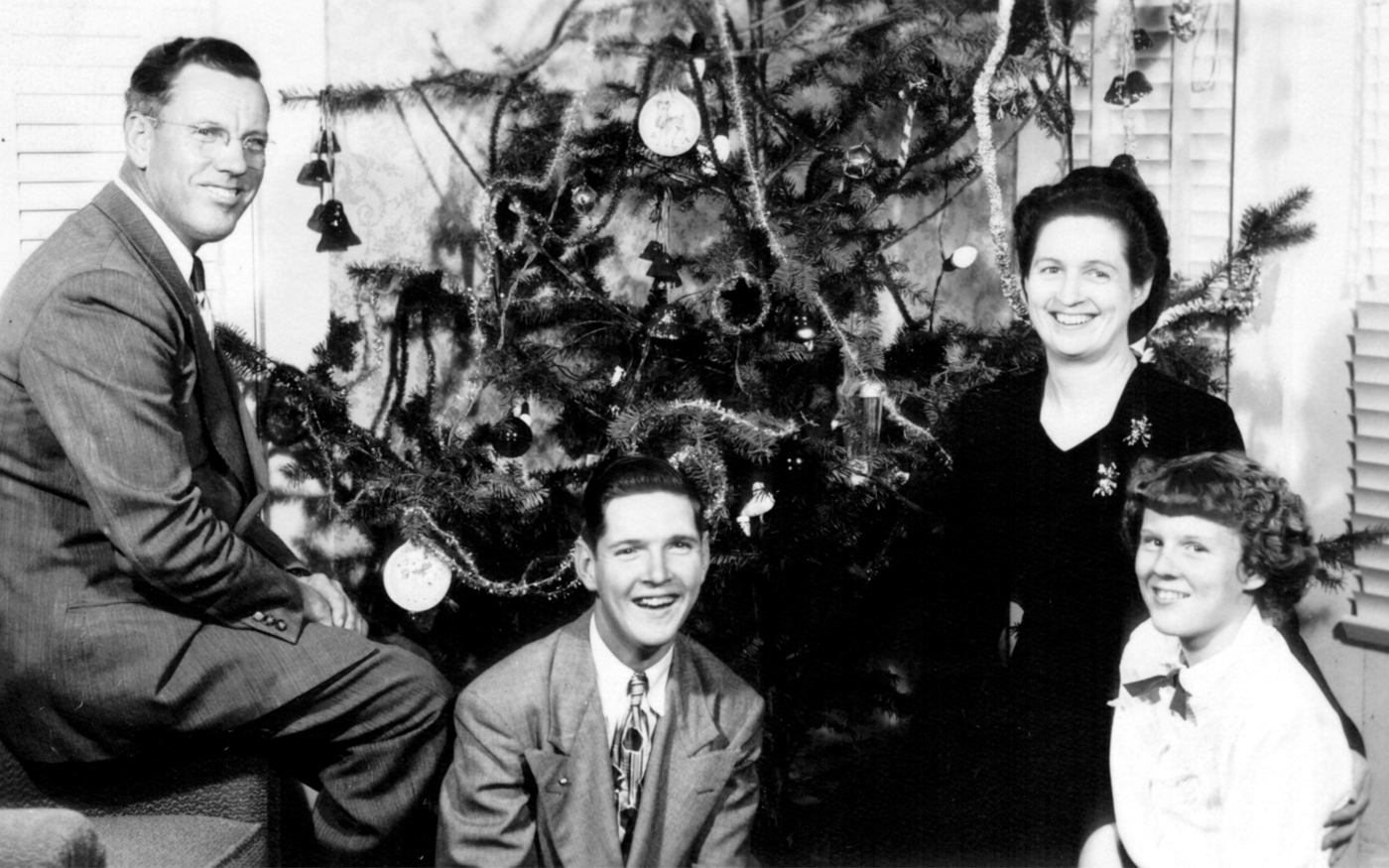
Carl Lucas Stewart (1902-1992) was born in a log house in De Leon, Comanche County, Texas. His parents were charter members of the local Baptist church. One of his earliest memories was traveling to church with his siblings in a horse-drawn wagon. The family was always faithful to attend church.
As a youngster, Carl had a fondness for the outdoors. He enjoyed living on a farm, and from the age of 7, he enjoyed swimming in the creek and went with friends and family members on all-night possum hunts and wolf chases. But when he was nearing his 8th birthday, his father became seriously ill and required surgery. Unfortunately, his father passed away, leaving his mother and her seven young children to carry on by themselves. After Carl’s father died, Carl’s mother had to sell most of the cattle, and the two oldest children dropped out of school to help support their large family.
Another chapter in Carl’s life unfolded as A.D. Williams, the song director at the St. Joe church took him under his wing. Carl spent one summer with Williams and his wife and learned all about shoeing horses, sharpening plows, and blacksmithing. This helped him to gain some needed life experience.
While living with the Williamses, a group of people arrived on the street in a great horse-drawn wagon with a big flat bed. They were singing, playing, hollering, and telling stories. The homespun music captivated him. He was especially captivated by one of the little instruments, which he soon learned was called a fiddle. It sounded good and looked easy to play. He decided that he must get a fiddle of his own.
After moving back home, he learned that an elderly man had a fiddle that never had been played, and he asked the price. All he needed was $5. When cotton picking time came, Carl found extra work and was able to save up enough money to buy the fiddle.
He got the fiddle ready to play, but he found that playing was not as easy as it first had seemed. But with persistence and practice, in a few weeks he was able to master a few simple tunes. Carl’s fiddle playing continued for months to come, but his family offered little encouragement. Before long, his mother’s high-pitched voice exclaimed, “Carl, you are driving me crazy! We can’t stand that noise.” From then on, Carl found solace in the old storm cellar where he could practice by himself and try to come up with new tunes.
One night he went to a community night of entertainment at the schoolhouse. A string band performed, and he learned some more fiddle tunes, including “Arkansas Traveler,” “Turkey in the Straw,” and “Cotton-eyed Joe.” He began to have high hopes of being a world-class fiddler.
Because of boll weevils and drought, the Stewart family moved to California to find work, but after a few months, this did not work out. They returned to De Leon, and Carl began working in the oil field near Desdemona where an oil boom was in full force. He began running with a rough crowd and began to gamble, play poker, smoke, and drink. By this time, he was a talented musician, and he became a ballroom fiddler.
He landed a job with the Texas Central Railroad Company in De Leon, but he seemed to be getting farther and farther away from God. His mother told him about a great revival being held in nearby Suez, and people were being saved, healed, and baptized in the Spirit. These people were commonly called “Holy Rollers.” Curiosity got the best of him, and he began attending the services. In the summer of 1922, he attended a brush arbor meeting at De Leon. This meeting was conducted by the same evangelists who had been at Suez. Seeds were being planted.
The next year, the summer of 1923, Carl was 21, and he found work with the M.K.T. Railroad to help support his mother. In his spare time, he fiddled for square dances and attended some big singing conventions. He also began attending services at a Pentecostal church. The singing and testimonies were very thrilling and gave him a hunger for God.
At a Pentecostal revival meeting, he heard a song about Pentecostals that captured his attention, and he also decided to introduce himself to the 16-year-old pianist and found out her name was Jewell Crain, the daughter of John Crain, a railroad engineer he had previously worked for. He came back to the revival the next night and borrowed a friend’s Model T to escort his new girlfriend to her home. Soon friendship blossomed into love, and the two were married on May 24, 1925, in Comanche County, Texas.
Six weeks after their marriage, a revival started at the Pentecostal church a block away from their home. Hundreds of people were attending the open-air revival each night. A young evangelist, H.H. Wray, was conducting the meeting, along with some other well-known Assemblies of God ministers and a fine group of singers and musicians. The Stewarts decided to attend the meetings. One night, when a message was given about the Rapture and the fact that some would be left behind, Carl became uneasy, and he decided to go forward for the altar call as the crowd sang “Only Trust Him.” He repented of his sins and called upon the Lord for salvation.
The revival services continued nightly, and Carl felt a hunger to receive the baptism in the Holy Spirit. Altar workers prayed with him for several nights, even into the wee hours of the morning. When it was announced that the ladies were having a Wednesday afternoon prayer meeting, he decided to go. He thought if he could get among some great praying women, he would surely receive the Pentecostal baptism. He did not want to wait any longer.
The next day, Carl and Jewell and a friend, Bob, went to the ladies’ prayer meeting. Carl said, “I feel that I can get the baptism of the Holy Spirit and not have to wait till tonight.” The ladies agreed, and before long Carl began to utter a language he did not know, and he was wonderfully filled with the Holy Spirit.
These were turning points in his life. Carl loved to tell about his salvation experience and receiving the Holy Spirit. He sermons often were punctuated with the phrase, “ I was in Comanche County when the fire fell.”
Carl soon became the song director at the church, and Jewell was the piano player. That July, they assisted H.H. Wray with the music and singing at a revival he was conducting in Eastland, Texas. After one night of the revival, while on the 30-mile trip back to De Leon, Jewell received the Baptism while they were singing a song, “Our Lord’s Return to Earth Again.” She began to tremble, and the words changed to a new language which flowed out of her mouth. She continued praised God in a heavenly language throughout the night.
In the fall of 1927, Carl and Jewell felt called into evangelistic work. Carl quit his job, and they sold their farm animals and other belongings. They trusted God to supply their needs as they traveled to share the gospel. When the Great Depression hit in 1929, times got rougher, but God provided.
During this time, Carl was not the main preacher. Instead, he assisted other evangelists by assisting with singing, and Jewell played the piano. But this all changed when Carl had a dream one night. He dreamed that a Western Union boy delivered a telegram stating the church at Olney, Texas, had called him to be their pastor. In his dream, he accepted the offer. In the morning, he awoke to find the dream was coming true. A Western Union boy did come and deliver that message, and sensing this to be God’s will, Carl Stewart accepted.
Starting with a congregation of 12, the church at Olney soon increased to 75, and with God’s help, he became an eloquent preacher. Carl Stewart was licensed with the Assemblies of God in October 1928 and was ordained June 12, 1930, while pastoring in Olney. During this time, the Stewarts began a Sunday afternoon radio broadcast from Wichita Falls, Texas. This attracted new people for every church service, and the congregation continued to grow.
After five years in Olney, Carl received a call from the congregation at Boulevard Assembly of God in Fort Worth to be their pastor. He accepted, and in August 1933, a new chapter unfolded in his life. He would preach three or four times a week and direct the Sunday night choir before preaching. Huge crowds began attending each service.
In 1934, plans were in the making for a larger facility to house the growing congregation. About this time, Carl became friends with C.H. Asher, an independent Pentecostal preacher. The two men held revivals together and shared their pulpits with each other. The results were that Asher joined the Assemblies of God, and his congregation decided to merge with Boulevard Assembly.
In the latter part of May 1934, the news came out that Clyde Barrow and Bonnie Parker had been killed by officers in Louisiana. Their bullet-riddled bodies were transported to Dallas for burial. A private funeral service was held, and Carl was asked to help with the arrangements. A funeral director asked Carl to sing at the funeral for the infamous gangster duo. They formed a quartet of funeral director Dudley Hughes, Carl Stewart, and two others. Another Assemblies of God minister, Cliff Andrews, of Oak Cliff Assembly of God in Dallas, preached the message. Armed police officers joined the crowd at the service for fear of danger, but the funeral went off without a hitch.
Carl also started a radio broadcast in Fort Worth on station KFJZ, which continued for almost 40 years. This included a quartet of gospel singers with his wife, Jewell, as the pianist. The theme song of the broadcast was “Tell Me the Old, Old Story.”
Early in 1935, with his great love for music, Carl felt an urge to publish some gospel hymnbooks. He published Rays of Glory (1935), Choice Gospel Songs and Hymns (1951), and Choice Gospel Songs (1959).
When Guy Shields moved his Shield of Faith Bible Institute from Amarillo to Fort Worth in 1936, Carl was asked to serve on the board of directors. He helped to see this school form a merger with Southern Bible College of Houston in 1940, when the name was changed to South Central Bible Institute. The next year Southwestern Bible School moved its campus from Enid, Oklahoma, to Fort Worth and united with the school already there. Stewart remained on the board of directors until the school (now Nelson University) moved to Waxahachie in 1943.
While pastoring in Fort Worth, Stewart was asked to be the song leader at a citywide revival at the Richey Tabernacle in Houston. He also was the song director of the Interstate Camp Meeting in Springfield, Missouri, in 1940.
In August of 1958, Carl Stewart and his wife completed 25 years as pastor of Boulevard Assembly of God in Fort Worth, Texas, and the church held a celebration in his honor. Under his leadership, the membership grew exponentially, the church outgrew its facilities three times, and many souls were saved. Stewart continued at the church until retiring in 1973, which completed 40 years of ministry at Boulevard Assembly.
In his retirement, he continued to be in demand as a speaker at camp meetings and revivals. In addition to pastoring, he served on the board of directors at Southwestern Assemblies of God College (now Nelson University) and was a presbyter of the North Fort Worth Section.
Much could be said about Carl Stewart’s ministry and legacy. Several fellow ministers and executives had fond memories of him. J. Don George said, “Carl Stewart was a one-of-a-kind, classic Pentecostal preacher … who greatly influenced young people in Texas throughout his life.” Pastor George Brazell stressed how Carl Stewart would challenge, motivate, and uplift people by the things he said. He always had a word of encouragement. James K. Bridges said, “He was one of the great Pentecostal pastors and camp meeting evangelists of the 20th century. He was a giant in our times. He was ‘Mr. Pentecost’ in Texas and the Assemblies of God.”
Who would have guessed that from lowly beginnings would come such a beloved pastor, song leader, and camp meeting speaker who influenced many. His legacy continues.
Read “Pastor Completed Twenty-Five Years of Service at Fort Worth, Texas,” on page 27 of the Aug. 3, 1958, issue of the Pentecostal Evangel.
Also featured in this issue:
• “A Man With a Jug of Water,” by Victor R. Ostrom
• “Whosoever Shall Call … Shall Be Saved,” by Wilson A. Katter
And many more!
Click here to read this issue now.
Pentecostal Evangel archived editions courtesy of the Flower Pentecostal Heritage Center.
What to Read Next
Affirmed for Ministry
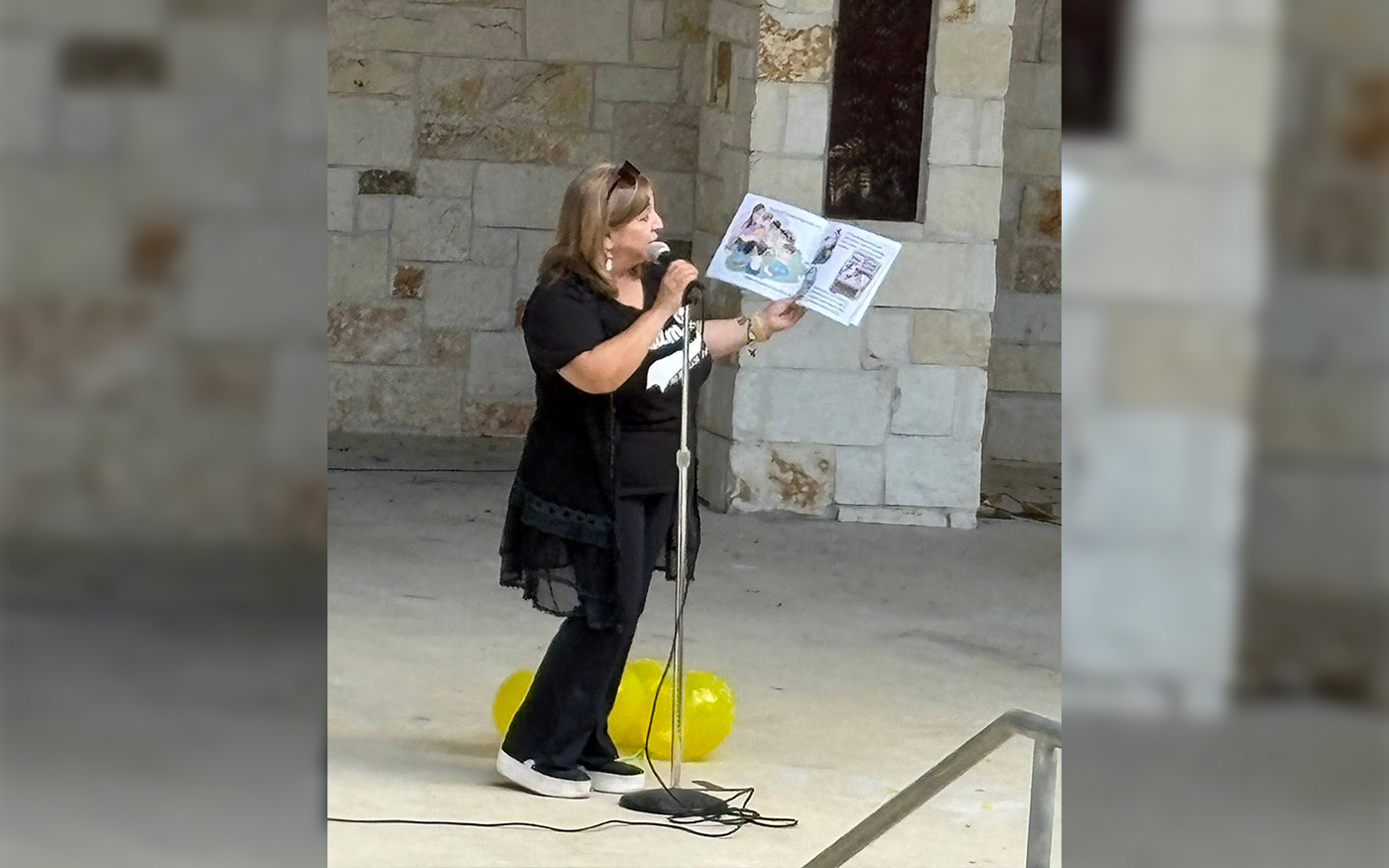
As a child Maria Valdez Perez was told she would never amount to anything, but she found affirmation through an AG Girls Ministries group who introduced her to Jesus.

Built on Miracles
A property once surrounded by addiction and crime, Teen Challenge of Arizona's new Tucson men's center now stands as a testament to God's faithfulness.
This Week in AG History — July 13, 1975
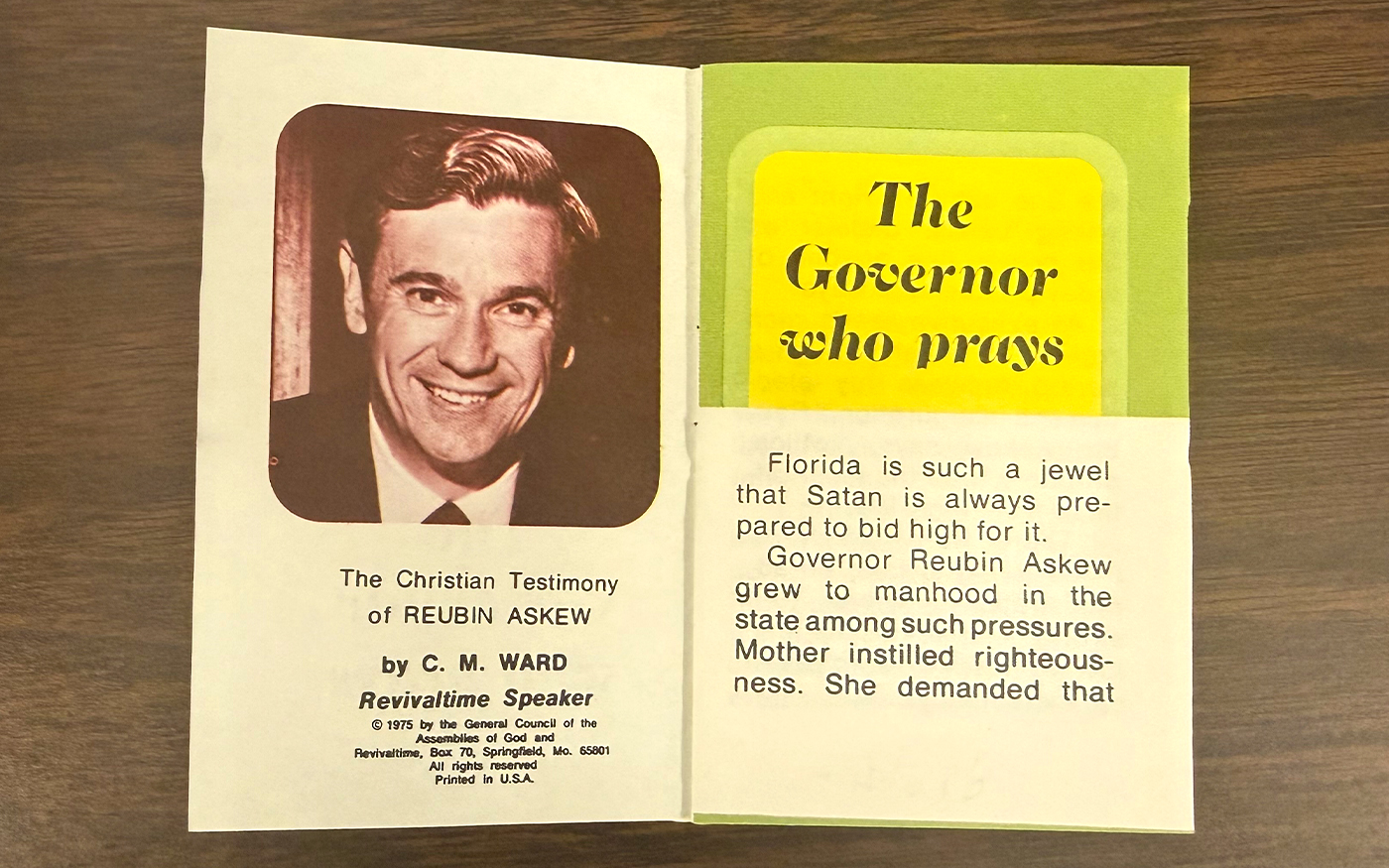
C.M. Ward interviewed many famous individuals for the Revivaltime radio program, including a governor known for his integrity and faith, Reubin Askew
This Week in AG History — June 30 1928
As an early missionary to China, Marie Stephany dedicated her life to establishing an orphanage, ministering to people with addictions, starting a Bible school, and founding churches. Her love for the Chinese people earned her the affectionate name of “Mother Peace.”
