ASSEMBLIES OF GOD
This Week in AG History — Nov. 22, 1947
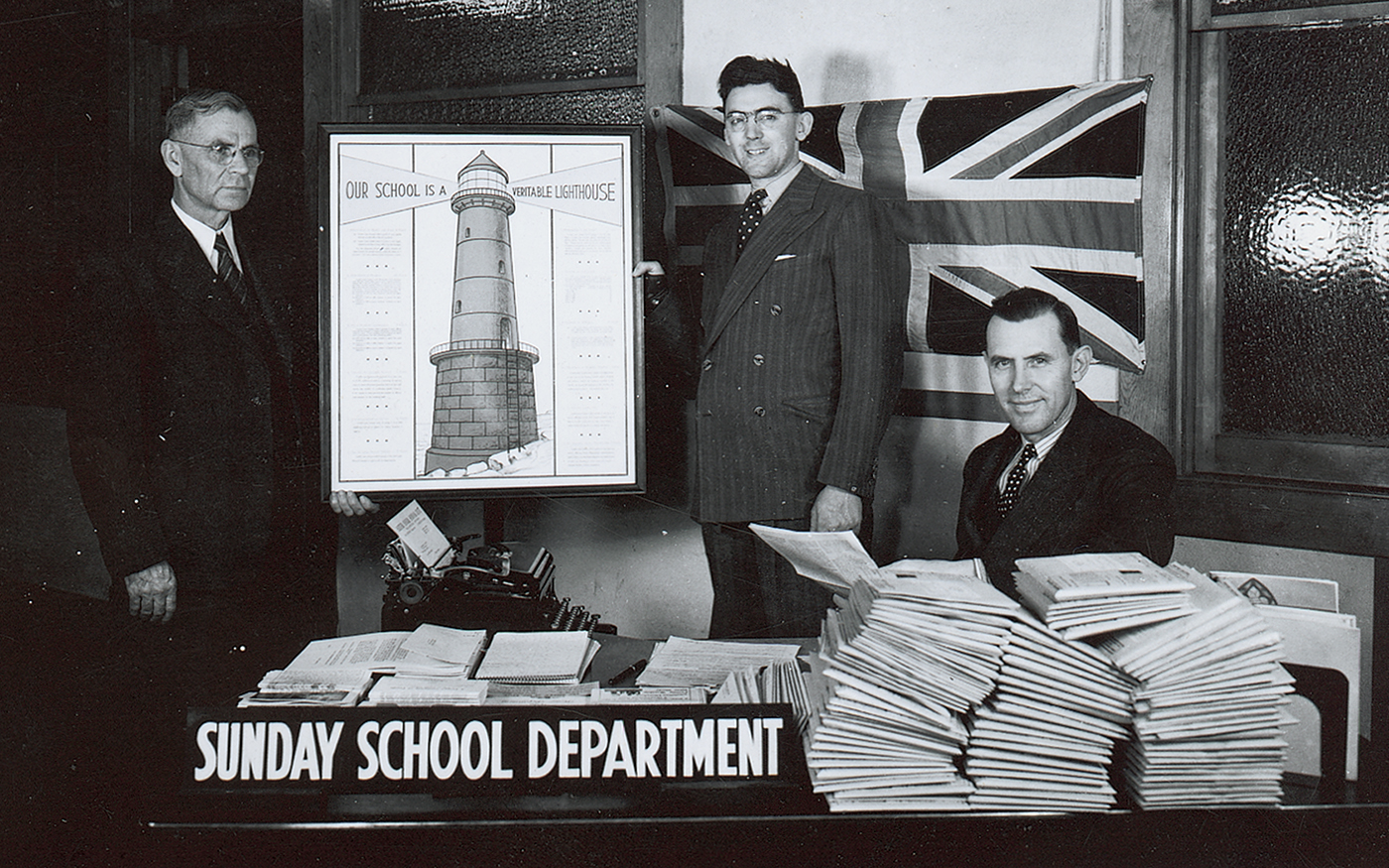
One of the important early leaders in the Assemblies of God was Marcus Grable, the layman who organized and directed the National Sunday School Department of the AG, becoming known as “Mr. Sunday School.”
Marcus Lockwood Grable (1890-1970) was born in Dearborn, Missouri, and moved with his family to St. Joseph, Missouri. He met and married Bina M. Peterman, and they were married in 1913 in nearby Wathena, Kansas.
Grable was a layman, and he started working as a lineman for a telephone company in Lawson, Missouri. He then became manager of the Ash Grove Telephone Company for 20 years. After his retirement, he was a salesman in Long Beach, California for a couple of years. By 1933, he became associated with Waddell and Reed Investment Company in Springfield, Missouri, and continued working with that company for the rest of his years. At that time, he was a Methodist. He also was a member of The Gideons International.
In 1933, Grable attended an interdenominational revival in the Shrine Mosque in Springfield. He was very moved by the invocation given by Ralph Riggs, the pastor of Central Assembly of God. Marcus said to his wife, “That man knows God!” Hungry for more of God, Grable soon decided to leave his socially prominent church and join the Assemblies of God.
The 1930s were a crucial time for Assemblies of God Sunday Schools. In 1933, Ralph Riggs wrote A Successful Sunday School, a manual that “quickly found its way into the hands of church workers throughout the Fellowship.”
General Superintendent Ernest S. Williams told the delegates at the 1933 General Council, “Sunday School interest has become almost a revival in our assemblies since the last General Council resulting in larger enrollments and an addition of approximately 600 new Sunday Schools.”
In May of 1934, J.Z. Kamerer, general manager of the Gospel Publishing House, set up a promotional office to stimulate interest in Sunday School and to advertise Assemblies of God Sunday School curriculum. Someone was needed to lead a new Sunday School department, and the Executive Presbytery found such a person when they appointed Marcus L. Grable, a person with unbounded enthusiasm for Sunday School. He also had experience, having served for several years as the president of the interdenominational Greene County Sunday School Association.
Marcus Grable had visited the last great International Sunday School Convention, which had been held in Kansas City in 1924, and he had many good ideas to help promote Sunday Schools. The department started with only a table, a chair, and a typewriter for his office.
The new department’s training emphasis was launched when Grable mailed a copy of A Successful Sunday School to every Assemblies of God pastor. He followed this by initiating the “Training for Christian Service” course. He and his wife spent many weekends traveling to churches within driving distance of Springfield to train teachers in local churches. Frequently accompanying the Grables were two young women who were part of the Gospel Publishing House’s editorial staff, Zella Lindsey and Dorothy Morris.
Even though he did not have much formal education, Marcus Grable was able to write and speak persuasively. Grable had a wholesome way of dealing with issues, and as a layperson, he was not a threat to pastors. He fully believed in the importance of Sunday School for the local church, and he promoted it with a passion. He was reared on a farm and many of his illustrations came from that setting. For instance, he urged Sunday Schools to keep good records. He used the example of how a farmer knows exactly how many chickens he bought, how much feed is dispensed, and how many fryers and eggs are sold.
By the time of the outbreak of World War II, the Sunday School had become a strategic force in the Assemblies of God, both as an evangelistic tool and as a means of conserving the results of evangelism. One thousand new Sunday Schools were being opened annually by the late 1930s.
Grable supplied his district Sunday School representatives with posters, charts, visual demonstrations, and large flannel boards. He employed sign painters and artists, so the visuals had professional quality. Statisticians studied trends and attendance reports, so his staff had good, hard data to work with. He produced Helps for Sunday School Secretaries, the Superintendent’s Assistant quarterly magazine, an annual Sunday School calendar, and various brochures to help the local Sunday School superintendent. He also started Our Sunday School Counsellor, which was published monthly, starting in July 1941.
Grable also advocated for holding local, regional, and eventually national Sunday School conventions. In February 1940, the first nationwide Sunday School conference of the Assemblies of God was held in Springfield, Missouri. Grable envisioned bringing local church workers together for practical workshops and inspiring mass meetings. He aspired to network Sunday School people 50 years before that term became a buzzword among church leaders. This first national conference was followed by other national Sunday School conventions and regional Sunday School conferences.
One of the programs Grable developed was called “The Lighthouse Plan for Sunday Schools,” which was launched in the fall of 1940. This involved having every district appoint a competent Sunday School worker to be known as District Sunday School Representative. This worker was to be responsible for the advancement of Sunday School work in his own district. The posters and promotional material outlined 12 features which could help improve Sunday Schools in the local church. These features were taught and emphasized at various Sunday School conferences and conventions.
By 1948, the National Sunday School Conventions held in Springfield had to be moved to the Shrine Mosque, because it was the largest auditorium in the city. Within a few years, the attendance exceeded 10,000. During the 1950s, regional conferences began to be held, with the accumulated attendance totaling more than 26,000.
Grable continued to lead the National Sunday School Department for 15 years, retiring after the national Sunday School convention in 1949. When he left this position, the department had a large staff of nearly 30 employees in Springfield, as well as a large number of Sunday School representatives and workers to promote Sunday School work all over the nation. Sunday School attendance, rallies, conferences, and conventions were booming. He definitely made his mark on the Assemblies of God and rightfully earned the name, “Mr. Sunday School.”
Read, “Evangelism in the Sunday School,” on page 6 of the Nov. 22, 1947, issue of the Pentecostal Evangel.
Also featured in this issue:
• “Where Is Happiness?” by D. Leroy Sanders
• “A Cause For Thanksgiving,” by Charles S. Price
And many more!
Click here to read this issue now.
Pentecostal Evangel archived editions courtesy of the Flower Pentecostal Heritage Center.
PHOTO: (L-r): J. Z. Kamerer, Loine Honderick, and Marcus L. Grable showing the Lighthouse Plan for Sunday schools; 1942.
What to Read Next
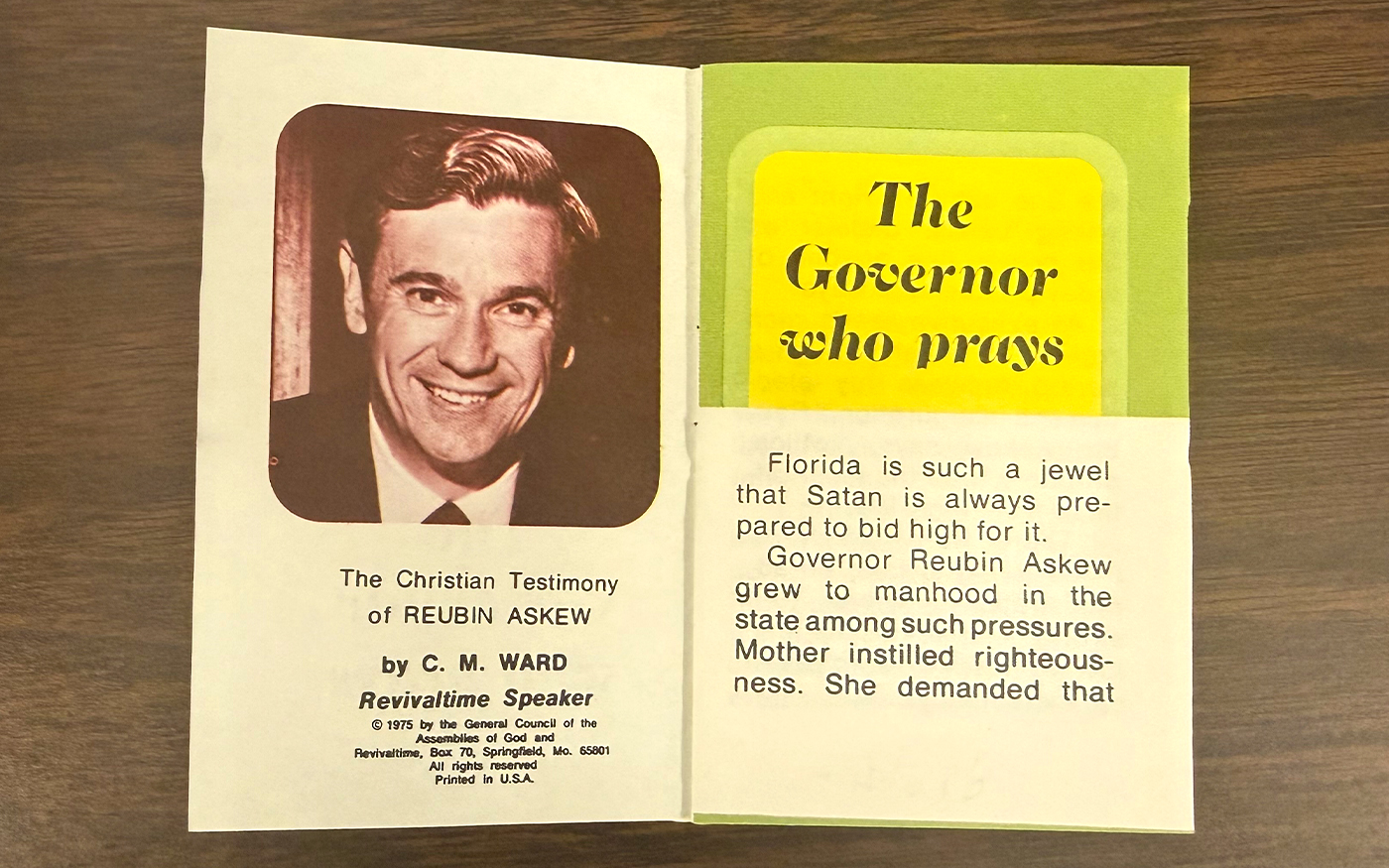
This Week in AG History — July 13, 1975
C.M. Ward interviewed many famous individuals for the Revivaltime radio program, including a governor known for his integrity and faith, Reubin Askew
This Week in AG History — June 30 1928
As an early missionary to China, Marie Stephany dedicated her life to establishing an orphanage, ministering to people with addictions, starting a Bible school, and founding churches. Her love for the Chinese people earned her the affectionate name of “Mother Peace.”
Where It All Began
The recently restored Hinson House, birthplace of the Assemblies of God's child welfare ministry, now serves as a prayer retreat calling pastors and churches to care for vulnerable children and foster families on the campus of COMPACT Family Services.