 ASSEMBLIES OF GOD
Christians Not Immune from Gambling Temptations

Editor’s Note: This article is the second in a two-part series about the appeal, temptation and dangers of sports gambling.
The current sports betting phenomenon is an unprecedented epidemic, according to Les Bernal, national director of Stop Predatory Gambling.
“There has never been a moment in American history like this with so many powerful interests trying to exploit Americans financially,” says Bernal, 56. “Gambling used to be on the fringe of society; now it’s the centerpiece of American sports, corrupting everything in its wake.”
Overall, 22% of all U.S. adults say they have bet on sports in the past year, according to Pew Research Center. A Gallup poll published last September indicated 63% of Americans now consider gambling “morally acceptable.”
“There is no act of state government that inflicts more harm on the financial, social, and mental well-being of its citizens than the institution of predatory gambling,” says Bernal, who is based in Lawrence, Massachusetts. “It’s an epic public policy failure.”
“Gambling is the new pornography in terms of its addictive quality,” says licensed psychologist Donald A. Lichi, vice president emeritus of the Akron-Ohio based Emerge Counseling Ministries, a counseling partner of the Assemblies of God. He notes that gambling disorder is the only non-substance addiction listed in the latest Diagnostic and Statistical Manual of the American Psychiatric Association. And just like pornography a generation ago, consumers of gambling no longer have to seek it out. It’s as close as a phone app.
As with other addictions, once a betting experience lights up pleasure centers in the brain, it makes an attachment imprint the user wants to repeat over and over. Specifically, if a participant scores an early win, a pathway rapidly develops in the brain to anticipate the next such pleasurable experience. It doesn’t help that artificial intelligence algorithms triggered by the gambler’s mobile phone history send more and more enticing opportunities from sports betting companies.
“You don’t have to go looking for it; it will find you,” says Lichi, 73.
Gambling may be unique among obsessions because it combines a triad of factors: wide legal availability, social acceptability, and attractive enticement due to quick wins. Around 90% of bets are placed on mobile phone apps.
“Once you get the big hit, it brings a neurochemical attachment,” Lichi says. “Many people quickly think they are the smartest person in the room.”
Gary W. Blackard, president and CEO of Adult & Teen Challenge, the Assemblies of God U.S. Missions ministry to those with addictions and other life-controlling issues, says there are multiple relational and financial indicators of problem gambling, including trying to win back what is lost, ignoring limits, and wagering as an escape.
“With the legitimization of legalization, people feel they have the freedom to get their feet wet and the next thing you know they’re trapped,” says the 57-year-old Blackard, who is based in Ozark, Missouri.
Christians, including ministers, aren’t immune from the temptations. Lichi counseled one pastor who ran up gambling debts on a church credit card and another who, unbeknown to his wife, racked up tens of thousands of dollars in gambling debts.
While the majority of gamblers can walk away from a loss, the estimated 20 million people in the U.S. who are considered “problem gamblers” don’t. Of those, approximately 2.5 million have a diagnosable gambling disorder. With the panic of mounting deficits, they begin “chasing the losses.”
Risk-takers engage in fantasy thinking, convinced they have it all figured out and can beat the system. Actually, they are falling deeper into debt, putting their career, family, and earnings in jeopardy.
“People become ensnared and think they have to stay with it, but that can lead to ruin,” Lichi says. “Sadly, for an increasing number of Christians, the credit cards are maxed out, the retirement savings are drained, and the marriage and job are at risk.”
While gambling entities turn a substantial profit on the masses placing bets, the highest yields stems from the out-of-control gambler. Thus, companies will assign a representative to text or call a gambler who has just lost a bundle with even larger “free bets” as an incentive to get back in the game.
Lichi explains that pride, selfishness, and narcissism all can be factors involved with the gambler who doesn’t want to admit that actions have become a stronghold.
“The will is necessary, but for some people who believe they can stop whenever they want, the will is not enough,” Lichi says. “At some point they have crossed the line and it’s become habitual and addictive. They are not in control anymore.”
CHURCHES BEWARE
Lichi urges ministers to learn about the signs of addictive behavior. In a relatively short period, he says, sports betting can become a life-controlling idol. Lichi notes that suicide and alcoholism rates are higher among problem gamblers than the general population.
“Pastors need to be informed regarding neuroscience and brain reward mechanisms, and be aware of enticements and how they can start a person down the path,” Lichi says. “The legalization, availability, and attractiveness of enticing quick-win platforms suggests that the Christian must take seriously the predictable consequences of problem gambling.”
The Assemblies of God position paper A Biblical Perspective on Gambling acknowledges the Bible contains no explicit statements condemning the practice. However, the document calls gambling problematic for a variety of reasons, including psychological addiction, susceptibility to organized criminal influence and control, as well as its detrimental impact on society in terms of increased divorce rates, impoverishment, and suicides.
The position paper outlines a multitude of ways in which gambling violates scriptural principles, including disregarding responsible stewardship, exploiting the poor, being inconsistent with a work ethic, disregarding warnings of greed, and failure to recognize God’s providence.
“The wrongness of it, the injustice of it, is that sports betting violates the sanctity of labor,” says veteran Assemblies of God world missionary Randy Hurst. “It’s ill-gotten gain.”
Another spiritual objection, Hurst says, is that gambling feeds the notion of superstition, or “lady luck.”
“Theologically, the problem is it is an inequitable means of acquiring money,” says Hurst. “Ironically, the government is exploiting people’s weaknesses rather than capitalizing on their strengths. The bottom line is that it erodes Christian character.”
Hurst, who lives in Springfield, Missouri, notes that churchgoers besotted with sports betting aren’t likely to be practicing good Christian stewardship with their finances.
Because of the growing availability and acceptance of sports betting in culture, Hurst says pastors will need to address the issue diplomatically. While some congregants may consider sermons disapproving of the practice as legalistic, Hurst says they are necessary when a family’s savings can be wiped out in a matter of days.
Assemblies of God General Secretary Brad W. Kesler realizes this is a temptation for some ministers.
“Gambling devastates ministers and their families just as much as other moral transgressions,” Kesler writes in the newly released Trusted with Treasure: A Handbook on Ethics in Ministry. Kesler, 52, says the AG considers participating in any form of gambling to be an ethical violation and disciplinable offense for a minister.
“The Scriptures admonish us not to be controlled by anything,” Kesler tells AG News. “Gambling, especially sports betting, can be addictive and can overtake our lives. Placing bets on sports is not good stewardship at any level, and in its extreme forms, can completely drain a family's life savings and put the family into debt.”
Most Christians recognize the moral problems involved in gambling, Lichi maintains. Efforts to humiliate problem gamblers can be counterproductive for those who already are ashamed of their activities. He recommends church leaders help habitual gamblers find an accountability partner, seek help in a Christian recovery group, or see a Christian licensed professional counselor.
Blackard maintains that acceptance of gambling by some Christians can be traced to a recent trend of not being as familiar with God’s Word as earlier generations.
“We have been desensitized to what holiness and stewardship means regarding money,” Blackard says. In addition to recommending that Christians as individuals read the Bible more, he suggests people watch sporting events in community, particularly with others who don’t want to steward money in the wrong way rather than those in a toxic relationship.
Gambling to excess can also lead to alcohol and drug addiction, Blackard warns. While the initial treatment for alcohol and drugs differs from gambling (detoxification and short-term withdrawal versus mind behavior modification), ultimately the biological, psychological, sociological, and spiritual remedy is similar.
“On the back end, it’s the same,” Blackard says. “People are looking for that dopamine hit.”
Despite the bleak scenario, Bernal is encouraged that there appears to be a public backlash to the omnipresent onslaught of sports betting. A Washington Post-University of Maryland poll released in December revealed 36% of respondents believe sports betting is a “bad thing,” compared to 22% in 2022. Pew Research Center last October reported a wider disparity among young males. The poll showed 47% of men under age 30 considered sports betting bad for society, compared to only 22% in 2022. Gallup in 2025 noted that gambling’s “morally acceptable” rate had dropped 8% since its peak four years ago.
Bernal says legislatures in Maryland and Vermont have introduced bills to repeal the legality of online sports gambling, and similar bills will be introduced in 20 other states this year.
EMERGING FROM THE FOG
Rob Sackowitz’s appetite for gambling first whetted at age 13 when he experienced a dopamine high with his father winning at a racetrack. At 18, he managed to gamble underage at Atlantic City casinos. At 23, the Air Force discharged him for financial irresponsibility related to operating an illegal gambling ring.
Twelve years of gambling addiction followed, during which Sackowitz borrowed and stole money to feed a habit, blowing nearly a million dollars. After being arrested nine times, losing his job, and facing the prospect of his wife leaving him, Sackowitz reached the brink of suicide. He owed $750,000 due to gambling debts.
Facing five years in prison, Sackowitz instead received a suspended sentence and probation. He started attending Gamblers Anonymous meetings faithfully, went to therapy and counseling, repaid his obligations over seven years, and wife Sandra agreed to stick with him. In 2020, Sackowitz founded Right Choice Recovery in Dayton, New Jersey.
“Compulsive gambling is a learned, inadequate response to life,” says Sackowitz, now 48. “People don’t need gambling to live. It’s not like food. People can have a wonderful life without gambling.”
Now as he helps clients, Sackowitz explains how the brain starts to heal from the fog of betting. He refocuses their attention to other pursuits.
Sackowitz is critical of sportsbook advertisements that display smiling spokespeople.
“They should show commercials depicting ruined credit scores, the wife leaving, and the gambler arrested for embezzlement,” Sackowitz says.
Sackowitz long ago comprehended the futility of betting.
“I recognized I couldn’t win, no matter what,” Sackowitz says. “I knew once I started, I couldn’t stop.”
Sackowitz says early in his recovery he came to believe in God.
“I see what He’s done in my life in so many ways, including removing the obsessions,” says Sackowitz, who has been “sober” for 13 years. He is grateful that Sandra, who gave him an ultimatum to get help, stayed with him. The couple, married 15 years, have two sons, 11-year-old Chase and 9-year-old Dylan.
“The best thing is my boys have never seen me gamble,” Sackowitz says.
Christian leaders can combat the temptation most simply by committing to never place that first bet, Kesler says.
“Given its addictive nature, we are playing a dangerous game when we dip our toes in the pool of sports betting,” Kesler says.
Editor's Note: Read the first article in this series, “No Sure Bet” here.
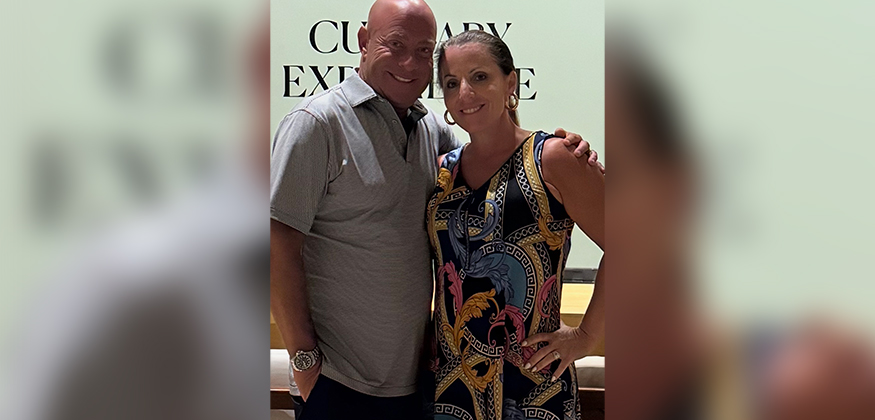
Lower Image: Rob and Sandra Sackowitz

What to Read Next

Faith Practices Finding New Life
Emerging trends show Americans – especially younger believers – reengaging with traditional Christian practices.
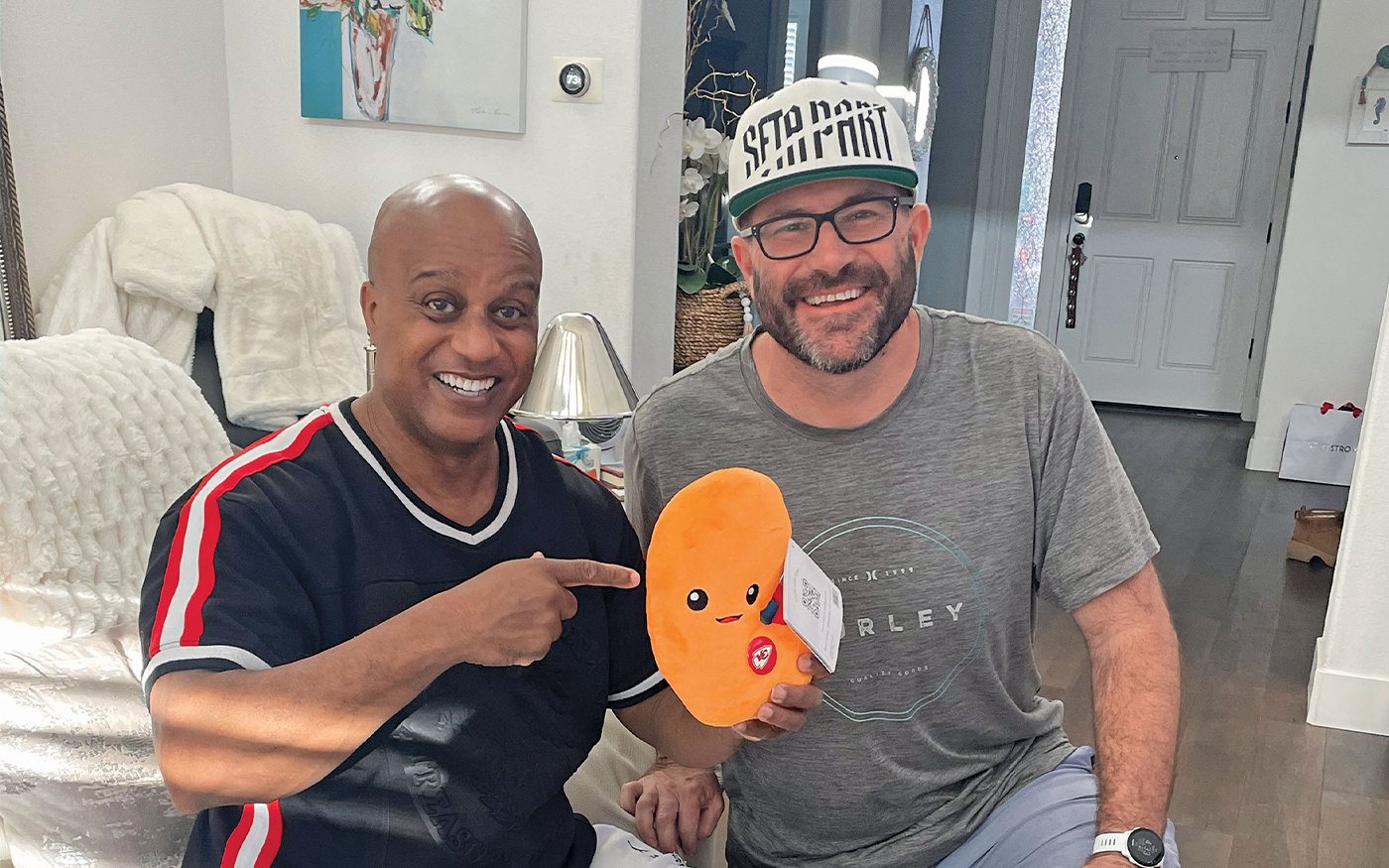
No Greater Love — Giving the Gift of Life
When a congregant needed a kidney, pastor Ross Morrill stepped up to help.

Prayer for America
As the United States celebrates its 250th birthday, General Superintendent Doug Clay offers six ways he’s praying for our nation.

Popsicle Sticks and Crowns — Christ’s Victory Can Be Ours
Serving God has never been about outrunning someone else or coming in first.
