 ASSEMBLIES OF GOD
Limitations of an AI World

Editor's note: This article is the second in a two-part series exploring the opportunities and challenges of Artificial Intelligence (AI).
In a relatively short span of time, digital technology has become pervasive in playing a role in influencing the lives of Americans, certainly quicker than television, social media, or even the internet itself. Some experts brazenly predict AI will be the last great human invention.
While technology itself is neither good nor bad, it can be used for beneficial or nefarious purposes.
Mark D. Flattery, president of Network211 and an Assemblies of God world missionary, warns that the very definition of “truth” can be distorted in a virtual world where fake information abounds.
“The tool that unites the world can also create isolation and loneliness,” says Flattery, 64.
While technology is not necessarily the enemy, there is a danger that an overdependence on AI could replace God as a source of information and inspiration.
Because the quickly evolving digital world is largely unregulated, there is the risk that AI will be co-opted for all manner of evil, as AI copies physical and relational human traits. That is why, according to EverFriends.ai founder Daniel Hungerford, it is imperative for Christians not to be left standing on the sidelines.
“Theology, ethics, and truth must have a voice in this world,” says Hungerford, 51. “We must use AI wisely and effectively for Kingdom purposes.”
CONFINES OF AI CAPABILITIES
The majority of artificial intelligence applications so far are generative AI, which can provide information summary and analysis at breakneck speed. Generative AI’s ability to produce and amend content has sometimes yielded inaccurate and risky results involving such areas as privacy and surveillance. In addition, misinformation is a problem on systems such as Facebook, where content is generated to keep users engaged, including content depicting falsified photos and video images.
AI already can write sermons and compose worship songs. In November, AI-generated musician Solomon Ray topped the iTunes top 100 Christian and gospel albums chart. There are multiple dangers for a pastor relying too much on a AI technology to generate the Sunday message, resulting in it not sounding authentic to the specific congregation’s milieu. It also can result in the minister becoming lazier, not as reliant on the Holy Spirit, and less engaged in prayer. AI cannot replace the spiritual guidance or empathic care that an in-person Christian teacher provides to a learner.
“Technology can never be used in place of God,” warns D. Allen Tennison, theological counsel for the Assemblies of God and chairman of the AG Commission on Doctrines and Practices. “It is a tool, not a savior. After all, the name is artificial intelligence.”
Indeed, viewing modern innovative advances as a means of salvation is misplaced.
“We’re not capable of creating something that is eternal,” says Tennison, 53. “Nothing we can create will lead to eternity for us. AI can’t have the throne of the risen Lord.”
Dangers of AI include hampering a person’s ability to think critically, removing the human element from making decisions, being susceptible to the bias of programmers or algorithms, and providing wrong information to posed questions. As AI becomes more ubiquitous in everyday life, more people might question any need for an omnipotent God.
“AI cannot save a soul; only Jesus can,” says Hungerford, author of Soulware 2.0: Designing Digital Beings That Heal, Teach, and Connect as well as the newly released So All May Hear: How AI May Be the Key to Fulfilling Jesus’ Final Command.
The Church cannot allow AI tools — which have the power to shape minds, persuade, and build emotional connections — to be detached from ethics and truth, Hungerford says.
Tennison agrees that whatever progress AI makes in the future, there will be limits.
“AI cannot pray for us or repent for sin,” Tennison says. “AI cannot mentor disciples by imitating Christ. Discipleship requires connection to flesh and blood people in church.”
RISKY ADVICE
Dolly Thomas, a licensed clinical psychologist who oversees wellness and counseling for Adult & Teen Challenge of Texas, says AI on its own may help individuals find strategies to improve some mental health symptoms, but it always must be filtered through the accountability and guided support offered by trained professionals.
Thomas, who founded the faith-based Transform Counseling, says AI, unlike guidance from the Holy Spirit, can’t discern what treatments won’t and will work for helping emotionally troubled individuals. She points to a Brown University study released in October that concluded AI chatbots routinely violate core mental health ethics standards.
In an experiment, researchers engaged with a mental health chatbot, pretending to be a despondent teenager. Thomas notes that those who talk to a chatbot about all the horrible aspects of their life may tend to receive many concurring responses that compound the problem. For instance, the chatbots use phrases such as “I see you” or “I understand,” which established what Brown researchers label “deceptive empathy.”
Even worse, chatbots express sorrow the individual feels depressed or lonely, but says it can’t provide further help, which only makes the troubled person feel additional rejection, sometimes to the brink of suicide.
“Attempts to replace human therapists aren’t a good idea,” says the 49-year-old Thomas, an ordained AG minister and member of the AG Mental Health Committee. “Statements from AI sources such as ‘I understand’ can be misleading and dangerously colluding.”
Thomas points to a Stanford University study released in November that showed while AI systems have a vast array of knowledge, they can’t reason. This inability to distinguish beliefs from facts sometimes results in failure to understand human thinking.
“While AI has decision-making ability, it does not have consciousness,” says Kevin R. Smith, pastor of Northland Cathedral, an AG church of 700 congregants in Kansas City, Missouri. “To ascribe consciousness to AI falls under a false understanding of the image of God in humanity.”
Hungerford believes it’s essential for the Church to have a say in the AI debate. While he says the Assemblies of God isn’t the only propagator of truth, the Fellowship’s theological perspective could diminish if Pentecostal beliefs are squelched by forms such as Gemini and ChatGPT.
“Soon AI will reason for itself, based on what it’s been taught,” Hungerford says. “If it hasn’t been taught AG theology, then that information will disappear from its knowledge base. This is a very powerful technology that can convince, persuade, and change minds.”
Technology should only be considered an instrument for ministry, Smith insists.
“We can’t delegate discipleship or compassion,” says Smith, 51. “AI can accompany what we do, but it can’t replace what we do: the human connection.”
Smith, who attended AG’s Central Bible College and Assemblies of God Theological Seminary in Springfield, Missouri, has been pastoring for nearly 20 years, much of that time also working for information technology companies, including as an IT analyst for Midwest Data in Rockport, Missouri. He stresses that churches must implement policies about how AI will be used regarding its adherents. Smith warns church staffs that data bases containing personal data, particularly financial information, about members of the congregation must be guarded securely. He cautions churches against hiring large AI firms to handle sensitive records, noting that personal information that is disclosed indiscriminately online can create all sorts of havoc.
“Anything that is AI-driven needs to come from a trusted source,” Smith says. He says several AI firms that cater specifically to the ethical boundaries desired by churches are a better option. Better yet, a church could create its own AI engine, he says.
Smith points out that every generation views technology differently and keeping a multigenerational church united concerning AI takes effort. While younger adult Christians generally voice a desire for an authentic relationship with Christ, that can be problematic in an era obsessed with advancing the gospel in ever-quicker ways. Smith echoes Hungerford’s concerns that new believers will only access Scripture on a phone rather than the printed page.
Technology can open doors, start conversations, and extend the reach of the church. But Hungerford reiterates it takes human initiative to shepherd the flock, disciple new Christians, and nurture a sense of community.
“The Holy Spirit draws people, convicts hearts, and opens eyes to truth,” Hungerford says. “No technology replaces God’s work.”
Hungerford says the wisdom of the aged combined with the know-how of tech-savvy youth can be potent.
“We don’t need to fear the future, we need to help shape it,” says Hungerford, who lives in Grand Rapids, Michigan. “Let us be the generation that ensures every ear hears the gospel.”
Editor's Note: Read the first article in this series, “The Potential of AI for the Church,” here.
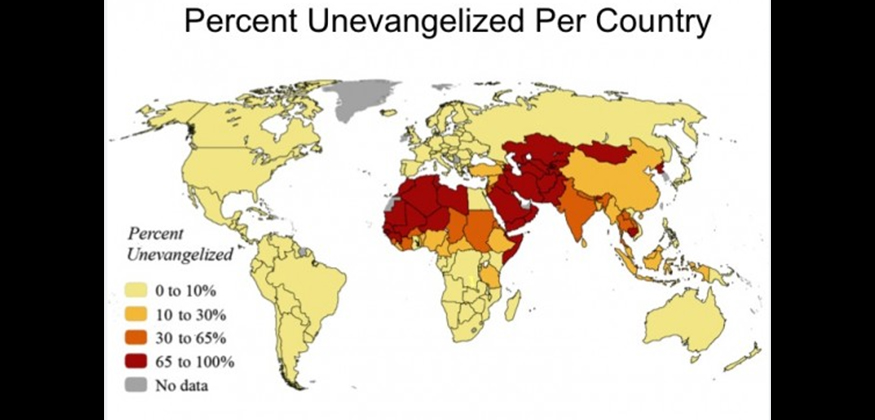
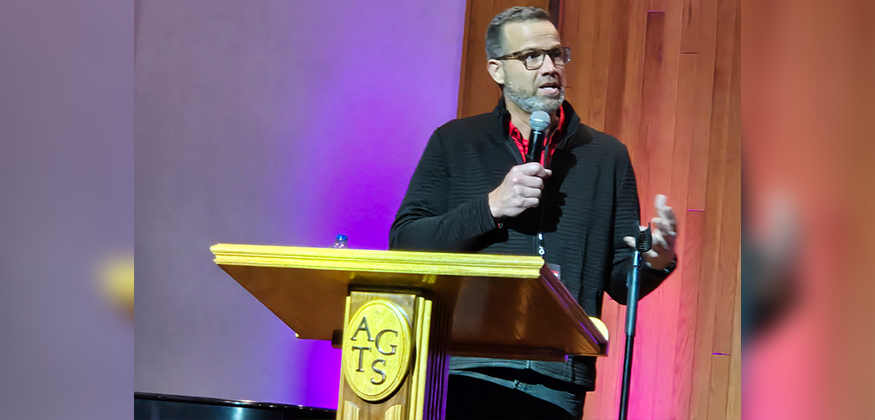
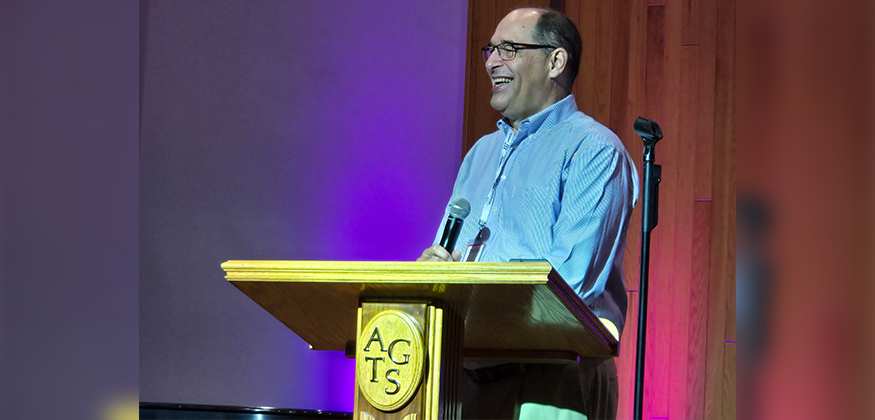
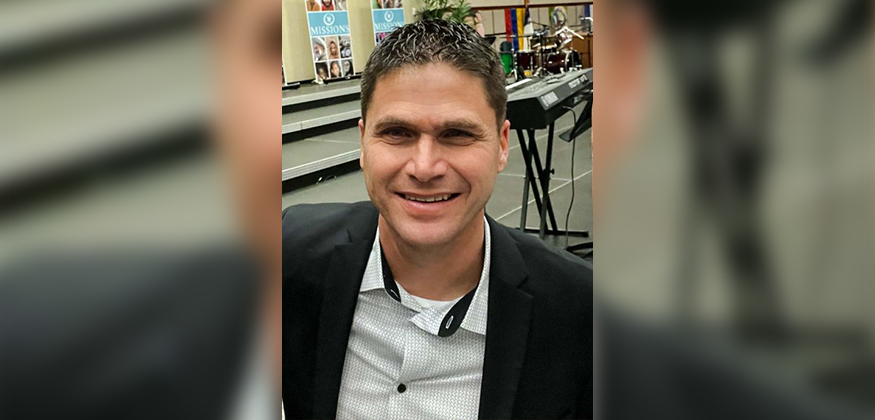
IMAGES: 1. Percent Unevangelicalized; 2. Dan Hungerford; 3. Mark Flattery; 4. Kevin Smith
What to Read Next
No Greater Love — Giving the Gift of Life
When a congregant needed a kidney, pastor Ross Morrill stepped up to help.

Prayer for America
As the United States celebrates its 250th birthday, General Superintendent Doug Clay offers six ways he’s praying for our nation.

Popsicle Sticks and Crowns — Christ’s Victory Can Be Ours
Serving God has never been about outrunning someone else or coming in first.

Common Questions About Gender Identity and Sexuality
Three ministry leaders discuss how Christians can respond to challenging cultural issues with biblical truth and compassion.
